

close
Choose Your Site
Global
Social Media
Views: 0 Author: Site Editor Publish Time: 2025-03-14 Origin: Site


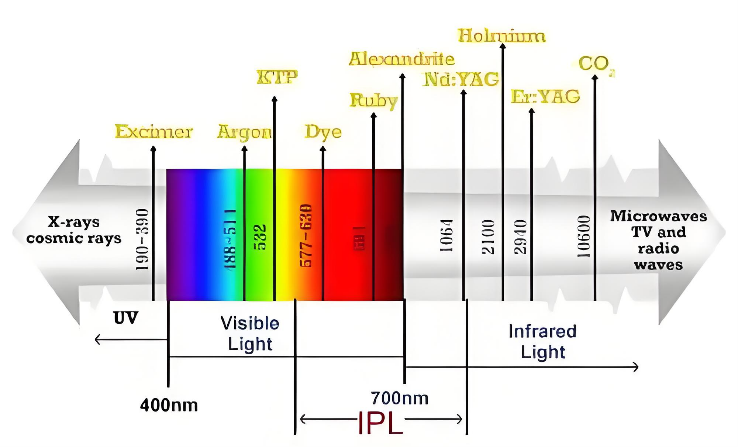
IPL is a multi-wavelength broadband light. After filtering the light of specific wavelengths through a filter, it can act accurately on the skin tissue of the eye. Under appropriate parameters and schemes, the light of specific wavelengths can firstly stimulate the normal function of the meibomian gland cells of the eyelids, prompting the glands to secrete meibum better; at the same time, it can promote the opening of the meibomian gland openings and melt abnormal meibum, and cooperate with meibomian gland massage to achieve better therapeutic effects. Secondly, through the photothermal effect, it can close the abnormal blood vessels carrying inflammatory mediators at the eyelid margin, thereby reducing inflammation. In addition, IPL also has the effect of killing eye mites and bacteria, reducing eye inflammation and thus relieving dry eye symptoms.
Facial gland dysfunction (MGD) is the core link of dry eye:
1. Insufficient total tear volume makes it difficult to keep the surface of the eye moist
2. Insufficient oil in the tear composition causes tears to evaporate too quickly
Before and after IPL treatment, please pay attention to the following points:
Professional evaluation: Before treatment, a professional ophthalmologist needs to conduct a comprehensive eye evaluation to determine whether IPL treatment is suitable.
During treatment: Before treatment, the face needs to be cleaned and sunscreen, foundation and other makeup and skin care products need to be washed off; during the treatment, the operating physician or nurse will wear a professional eye mask for the patient to avoid direct damage to the eyes from strong light pulses; within a few days after treatment, the skin around the eyes may be more sensitive to light, and long-term exposure to strong sunlight should be avoided as much as possible. Sunscreen and sunglasses can be used for sun protection.
Combined treatment: IPL treatment still needs to be combined with other methods, such as artificial tears, anti-inflammatory eye drops, hot compresses, meibomian gland massage, lacrimal punctum embolism and other treatments. The specific method of combined treatment still needs to be determined by the ophthalmologist according to the patient's condition.
Others: IPL treatment is not a one-time solution. Usually, a course of treatment consists of 3-4 treatments, with an interval of 2 to 4 weeks between each treatment. Each ophthalmologist and hospital has different treatment plans, which still need to be determined based on the patient's condition.
In short, IPL, as a new non-invasive treatment, is bringing good news to more and more dry eye patients with its unique advantages. However, as a multi-factorial ocular surface disease, patients should pay attention to the adjustment of their living habits and eye habits while receiving professional treatment, such as reducing the use of electronic devices, improving sleep, avoiding staying up late, and developing good eating and exercise habits, etc., in order to reduce the recurrence of the disease.


